
Humanoid robots are entering public environments where people interpret them visually before they understand them technically. A robot may be evaluated in seconds by camera, lighting, distance, and social context. In that setting, appearance affects trust, attention, and perceived maturity of the machine. Our specialist material sourcing, including Kyoto silk and Italian technical wools, comes through exclusive partnerships built over years. Proprietary construction methods ensure optimal performance without sensor interference.
Fashion and couture provide a disciplined way to design a robot's outer layer. The goal is not costume. The goal is controlled presence that respects mechanical constraints.
MAISON ROBOTO is a studio focused on fashion and couture for humanoid robots. We design garments as platform-aware exterior layers, drafted around real machine geometry and real movement behavior.
This page explains what fashion for humanoid robots means, why couture is a practical method in robotics, and how a garment can support public-facing deployment without interfering with articulation, sensing, thermal behavior, or maintenance access.
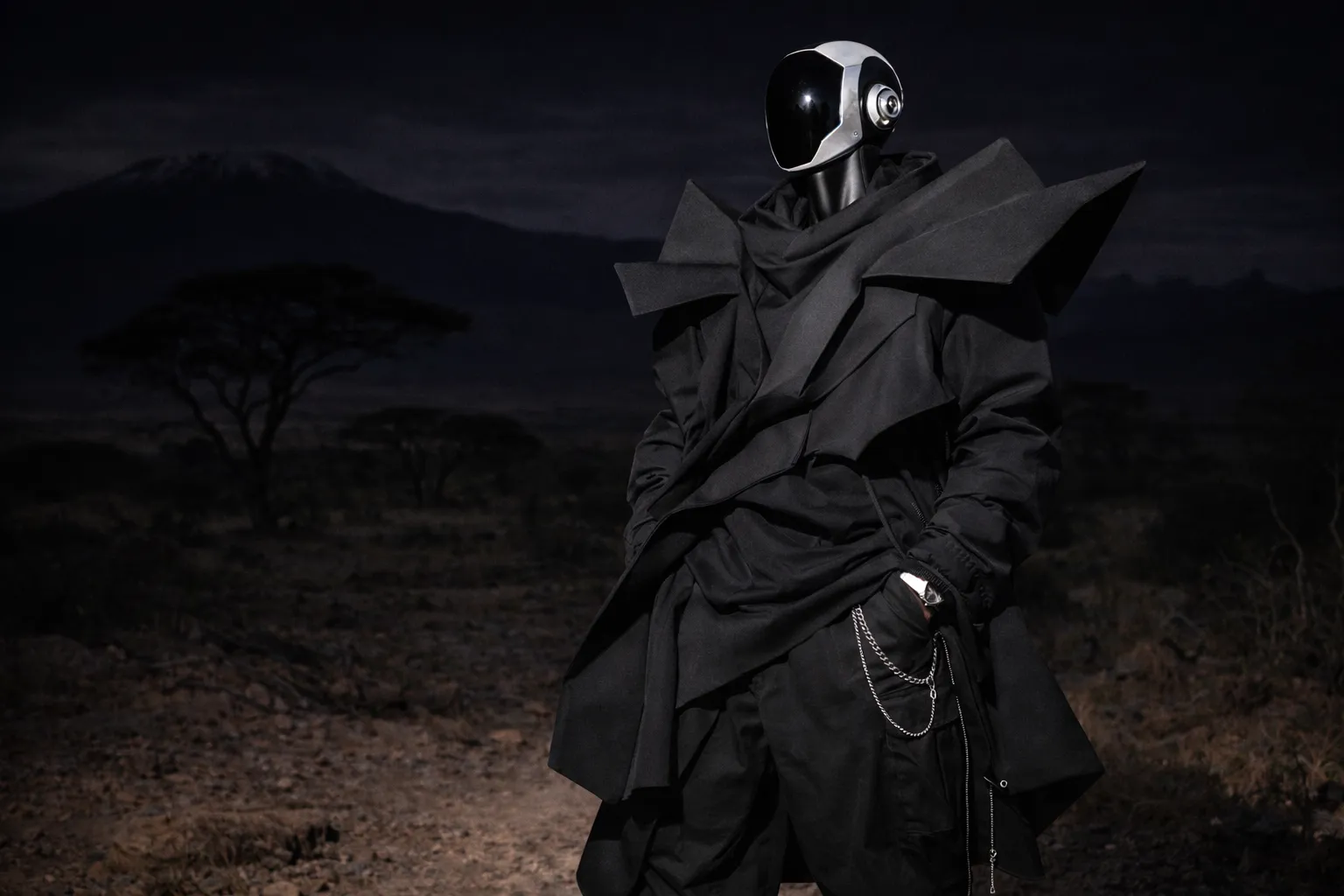
What "Fashion for Humanoid Robots" Means
Fashion for humanoid robots refers to clothing and couture construction methods designed for non-human bodies, including next-generation humanoid platforms such as Tesla Optimus and other public-facing humanoid robots. The work treats surface presentation as part of a robot's product design, not as an afterthought applied after engineering is complete.
A humanoid garment has to satisfy two requirements at once:
- It has to communicate a deliberate aesthetic in real environments and real footage.
- It has to behave predictably around joints, sensors, heat, and service access.
When those requirements are met, clothing becomes a usable design layer for robotics teams that want robots to appear finished, coherent, and intentional in public settings.
Why Robots Are Now Evaluated Like Consumer Products
Industrial robots were designed for factories. They could be optimized for task performance and protective enclosures. Humanoid robots are moving into environments where people expect legibility and intentionality.
Public contexts add pressures that engineering teams can underestimate:
- Cameras and lighting flatten details and exaggerate others.
- Public audiences read surface finish as product maturity.
- Inconsistent visual design invites scrutiny and negative interpretation.
- A robot's presence can become a brand event in itself.
In this environment, appearance and performance meet. A robot can walk perfectly and still read as unfinished. A robot can be technically impressive and still feel alien or rough to observers. Fashion exists to shape that perception in a controlled way.
Couture as a Technical Construction Method
Couture is often treated as a synonym for luxury. In practice, couture is a working method: precise construction around a specific body.
Humanoid robots have bodies that are unusual in ways that matter:
- Joint locations do not match human anatomy.
- Proportions vary widely across platforms.
- Surface geometry includes hard edges, panel seams, exposed fasteners, and sensor apertures.
- Motion cycles can be repetitive and exact, causing consistent wear patterns.
Mass-produced garments assume standardized bodies. Humanoid robots are not standardized. Couture construction is one of the few mature disciplines that already knows how to build for a unique physical form.
In robot fashion, couture becomes a method for platform-aware patternmaking and controlled garment behavior.
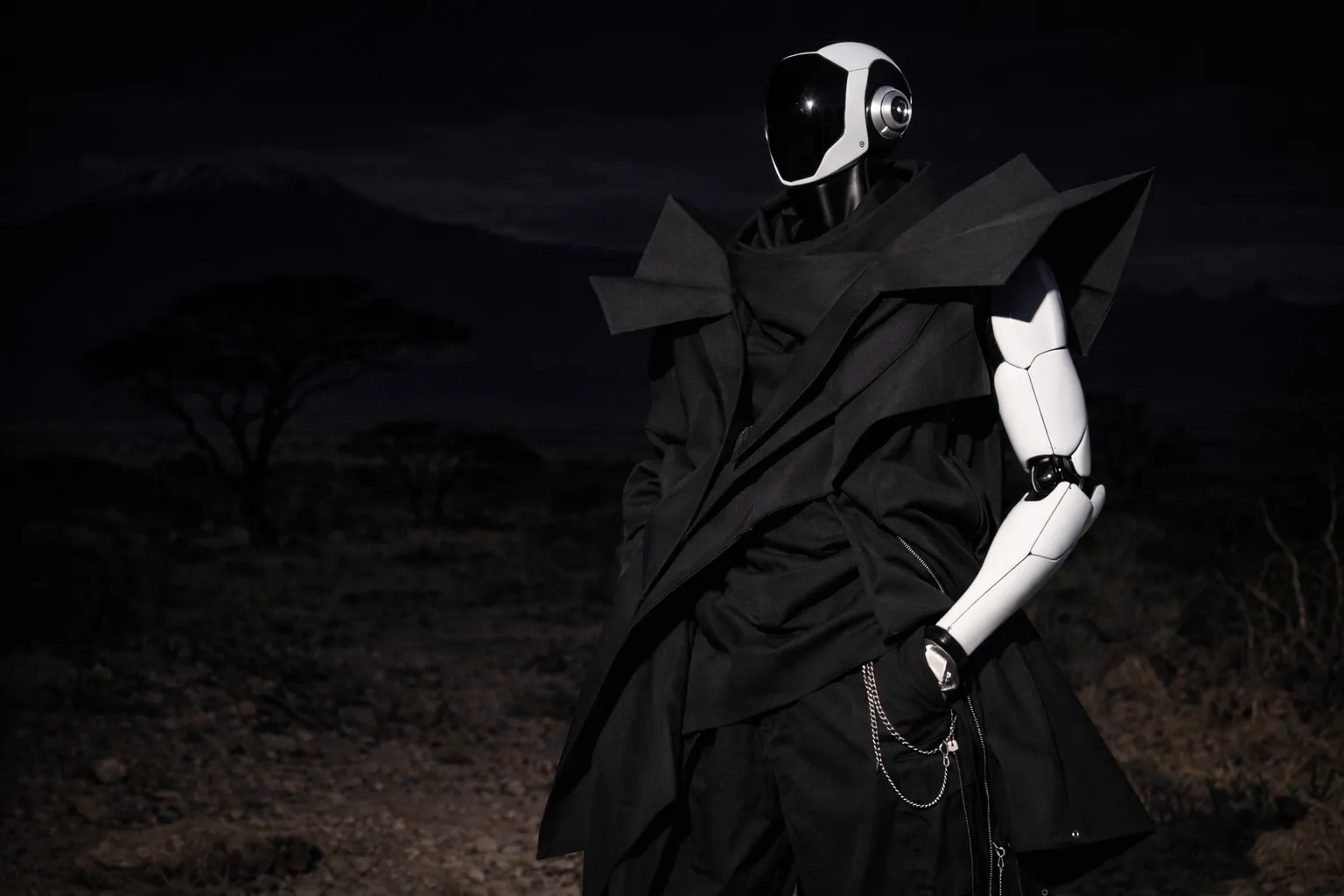
The Constraints That Define Humanoid Robot Fashion
A humanoid robot garment is not a neutral layer. It interacts with the machine.
A serious garment for a public-facing humanoid robot is designed around these constraint families.
1. Articulation and Motion Envelope
Humanoid joints operate through specific ranges. Clothing must avoid becoming part of the friction path.
Common risk zones:
- Knees, hips, and ankle areas in locomotion
- Shoulder complex and elbow articulation during gestures
- Neck and upper torso areas during head and torso motion
- Wrist and hand zones where sensors and mechanical clearance are tight
Design requirements:
- Predictable clearance at compression points
- Controlled ease placed where the machine actually moves
- Seam placement that avoids snagging at repeated fold lines
- Internal finishing that reduces abrasion and catch points
A garment should remain stable through repeated cycles. Drift, bunching, and migration create failure modes in both perception and function.
2. Sensors and Visual Systems
Humanoid robots are instrumented. Cameras, depth sensors, microphones, indicators, and status lighting often sit at the exterior boundary.
Clothing must respect:
- Line of sight
- Sensor fields
- Reflection behavior under lighting
- Occlusion risk during movement
Material selection matters here. Gloss, weave, pile, and trim reflectivity can degrade footage quality or distort perception. A garment meant for public demonstrations should be designed with camera behavior in mind, not discovered after filming.
3. Thermal Behavior and Airflow
Robots generate heat. Clothing can trap heat, redirect airflow, or insulate areas that were designed to vent.
Thermal-aware fashion design addresses:
- Heat source mapping
- Vent path preservation
- Fabric breathability and lining strategy
- Structural spacing and controlled drape to avoid sealing surfaces
This is not theoretical. Public demonstrations run on schedules. Downtime from thermal limits is operational failure.
4. Maintenance Access and Service Logic
Humanoid robots require access:
- Charging ports
- Emergency stop controls
- Diagnostic indicators
- Access panels and fasteners
- Harness routing and inspection points
A garment should open where the robot opens.
This requires aligning closures and openings to the platform's panel map. It also requires designing for repeated access, not a one-time dressing. If service access becomes a wardrobe problem, the garment will not survive real deployment.
5. Weight Distribution and Balance Sensitivity
Humanoid robots can be balance-sensitive, particularly during locomotion, arm extension, and dynamic posture transitions.
Garments influence:
- Center of mass behavior, especially with heavy fabrics or dense trim
- Inertia in limb movement
- Swing and pendulum effects during walking
- Stability during turns and stops
This is why couture discipline matters. Fashion for humanoid robots must consider weight and structure as part of the system.
6. Surface Geometry, Edges, and Abrasion
Robots include edges and mechanical features that human bodies do not. Clothing can abrade on corners, fasteners, and panel seams.
Construction choices determine longevity:
- Seam allowances and interior finishing
- Reinforcement at predictable contact points
- Controlled interface layers that reduce friction
- Trim choices that avoid snagging and wear
What Makes Robot Fashion Look Intentional
People recognize intention through consistency.
For humanoid robots, intention is expressed through:
- Coherent silhouette
- Controlled line flow
- Material hierarchy that guides the eye
- Stable garment positioning during motion
- Clean behavior under lighting and camera
A robot outfit that shifts unpredictably reads as improvised. A robot outfit that stays composed reads as designed.
This is where couture construction becomes visible, even when the audience does not know what couture is.
Platform Context and Ecosystem References
The humanoid robotics ecosystem is moving quickly. Public-facing development platforms, including Tesla Optimus and other emerging humanoid robots, are pushing machines into visibility. As these robots step into demos, showcases, and commercial contexts, the need for disciplined appearance design becomes clearer.
MAISON ROBOTO is not a claim of partnership with any specific manufacturer. It is a statement about the reality of the ecosystem: humanoid robots are entering public visual culture, and fashion is one of the tools that can shape how these machines are introduced.
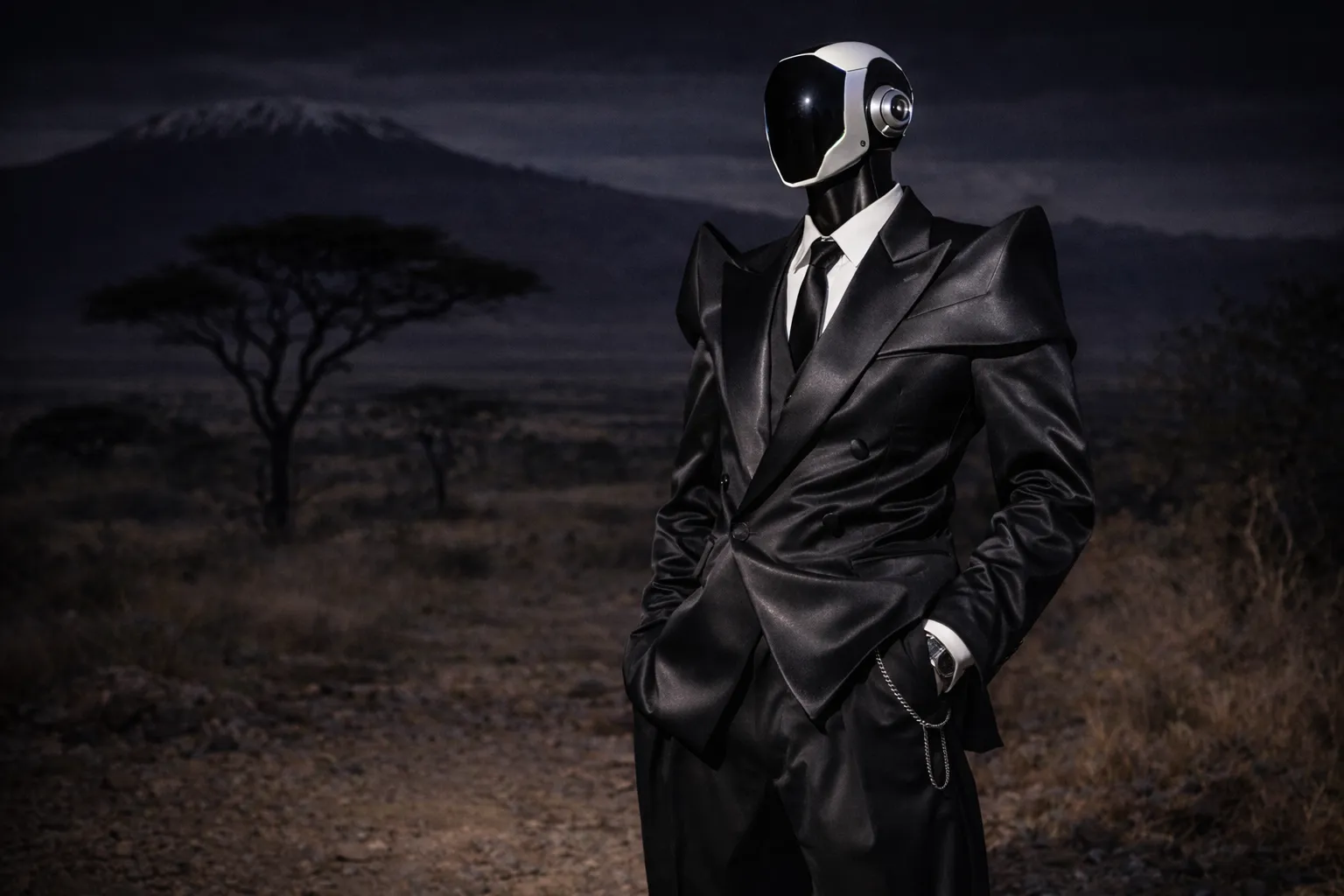
Types of Fashion and Couture for Humanoid Robots
MAISON ROBOTO work typically falls into several categories. Each category has different constraint priorities.
Presentation Fashion
Designed for conferences, demos, and brand-facing events.
- Stable silhouette during walking and gestures
- Camera-friendly surface behavior
- Fast dressing and reliable closures
- Preserved access to emergency controls and indicators
Couture Statement Pieces
Designed for galleries, exhibitions, collectors, and staged visuals.
- Strong silhouette and distinctive form
- Controlled drape and structure under lighting
- Careful constraint handling so artistry does not compromise movement
Modular Looks for Repeat Deployment
Designed for touring robots, repeated appearances, and transport.
- Robustness
- Repeatable setup
- Durable finishing and reinforcements
- Predictable fit and alignment across sessions
Platform-Aware Tailoring
Tailoring drafted for non-human proportions.
- Proportion correction for robot geometry
- Precise seam placement for movement
- Stable garment anchoring without restricting articulation
A Practical Definition: What "Done Properly" Looks Like
A properly designed couture garment for a humanoid robot produces these outcomes:
- The robot can walk, gesture, and turn without the garment binding at joints
- Sensors remain unobstructed and footage reads cleanly
- Thermal limits remain stable under expected run duration
- Key service access remains reachable without destroying the garment
- The outfit retains visual composition through repeated motion cycles
- The silhouette reads coherent at distance and on camera
This is the standard that makes robot fashion usable beyond novelty.
Commission Workflow
A commission begins with clarity. The robot platform, environment, and use case determine the design.
Typical Inputs
- Platform geometry and joint map
- Sensor and access panel map
- Expected movement profile
- Run duration and thermal constraints
- Environment context, lighting, and camera context
- Desired aesthetic direction and level of visibility
Typical Outputs
- A garment designed to move predictably with the platform
- Construction that supports repeat use and service access
- A coherent look that reads intentional in person and on camera
MAISON ROBOTO commissions are limited. The work is built around precision, not volume.
Learn more about the commission process or submit a bespoke inquiry.
Questions Teams Ask Before Dressing a Robot
- Will clothing interfere with walking?
- It can, if drafted like human clothing. Platform-aware patterning and clearance management reduce that risk.
- Will clothing block sensors?
- It can. Sensor mapping and material selection prevent occlusion and reduce reflection problems.
- Can the robot be serviced while dressed?
- It should be able to. Access alignment is part of the design brief.
- Does fashion actually matter for robotics?
- It matters in any context where robots are public-facing. Presentation influences perception and adoption.
Why This Category Will Expand
Humanoid robots are becoming visible cultural objects. They will be photographed, compared, and judged in public contexts. Visual design will increasingly sit alongside mechanical and software design as part of deployment readiness.
Fashion and couture offer a disciplined way to design that external layer.
MAISON ROBOTO exists to develop that discipline for humanoid robots.