Why
Not
DIY?
It looks simple. Buy some fabric, hire a tailor, dress your robot. But there are 147 articulation points, 23 sensor windows, and 12 heat dissipation zones between you and a garment that actually works. Here is why the experts exist.

The Comparison
What looks like a simple tailoring job is actually precision engineering. Here is how DIY stacks up against professional robot couture.
| Dimension | DIY / General Tailor | MAISON ROBOTO |
|---|---|---|
| Articulation Engineering | X Trial and error. Garments restrict movement within weeks as seams fail at stress points. | + 3D articulation mapping of every joint axis. Patterns engineered for full range of motion across all degrees of freedom. |
| Sensor Accommodation | X Covered sensors, blocked LiDAR, impaired depth cameras. Functional degradation from day one. | + Transparent windows for LiDAR, conductive mesh for capacitive touch, RF-transparent zones for wireless. Every sensor mapped. |
| Durability Testing | X No testing infrastructure. Fabric fails at servo stress points after a few thousand cycles. | + 500,000+ articulation cycle testing. Abrasion resistance, UV stability, and wash cycle validation on every garment. |
| Material Science | X Off-the-shelf fabrics not rated for robotic wear patterns. Wrong stretch, wrong weight, wrong durability. | + Cordura, Dyneema, proprietary stretch composites. Fabrics sourced globally from France, Italy, Japan, most custom made in-house. |
| Maintenance Program | X No replacement schedule. No repair protocol. When it breaks, start over from scratch. | + Scheduled replacement cycles. Repair kits. Quick-swap garment architecture. Fleet maintenance programs. |
| Turnaround Time | X Months of iteration. Multiple failed prototypes. No guarantee the final version works. | + 48-hour consultation. 2-4 week prototype. Production-ready in 4-6 weeks. Rush timelines available. |
The Hidden
Complexity
A humanoid robot is not a mannequin. It is a precision machine with engineering constraints that make standard tailoring impossible. The proprietary construction methods required took us two years of continuous R&D and hundreds of failed prototypes to develop. Safety and certification considerations alone eliminate most DIY approaches.
Servo Stress Points
Every joint is driven by high-torque servos that generate immense mechanical stress. Fabric placed incorrectly across these points will tear, fray, or restrict movement. We map every stress vector before cutting a single thread.
Heat Dissipation
Motors and processors generate significant heat. Covering them with the wrong material causes overheating, throttling, and potential hardware damage. Our garments include engineered ventilation channels and heat-transparent panels.
Cable Routing
Internal cables, harnesses, and data lines run through specific channels. Garment pressure on these routes causes signal degradation, connector wear, and eventual failure. We X-ray every cable path before designing the pattern.
What DIY
Actually Costs

- Robot downtime while you iterate on prototypes that do not work. Every hour offline is lost revenue.
- Sensor degradation from covered or compressed sensor arrays. Your robot's core functionality decreases.
- Overheating damage from improper ventilation. Repair costs for heat-damaged servos and processors far exceed the cost of proper garments.
- Brand damage from a poorly dressed robot in a customer-facing environment. First impressions are permanent.
- Repeated material costs from fabrics that fail at stress points. The fifth prototype costs more than getting it right the first time.
- Engineering time from your technical team debugging clothing-related interference instead of building product.
The MaisonRoboto
Difference

Built for
This Exact
Problem
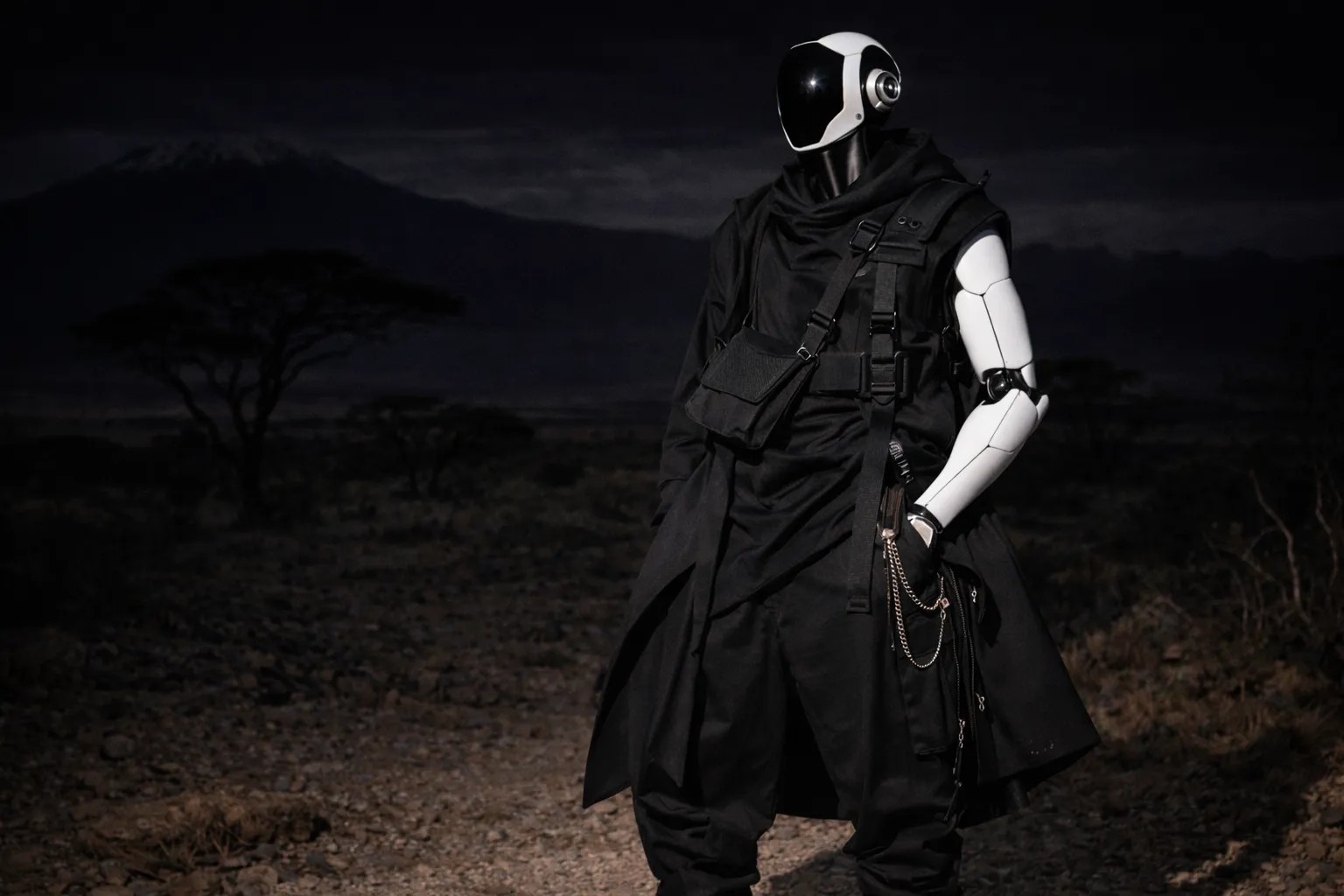
We are not a tailor shop that took on a robot project. We are the world's first fashion house built from the ground up for humanoid robots. Every tool, every process, every material relationship exists specifically for this challenge.
Our couturiers in Paris combine traditional haute couture technique with robotics engineering. Articulation maps, thermal imaging, and stress analysis inform every pattern before a single stitch is made. Fabrics sourced globally from France, Italy, Japan, most custom made in-house.
The result: garments that look like luxury fashion and perform like precision engineering. Zero operational interference. 500,000+ articulation cycles tested. Every garment backed by our maintenance program.
Leave It to
the Experts
Skip the failed prototypes, the sensor damage, and the wasted engineering time. Get it right the first time.
Commission NowGet It Right
the First Time
Tell us about your robot and what you need. We respond within 48 hours with a detailed consultation including design direction, material recommendations, and pricing. No obligation.