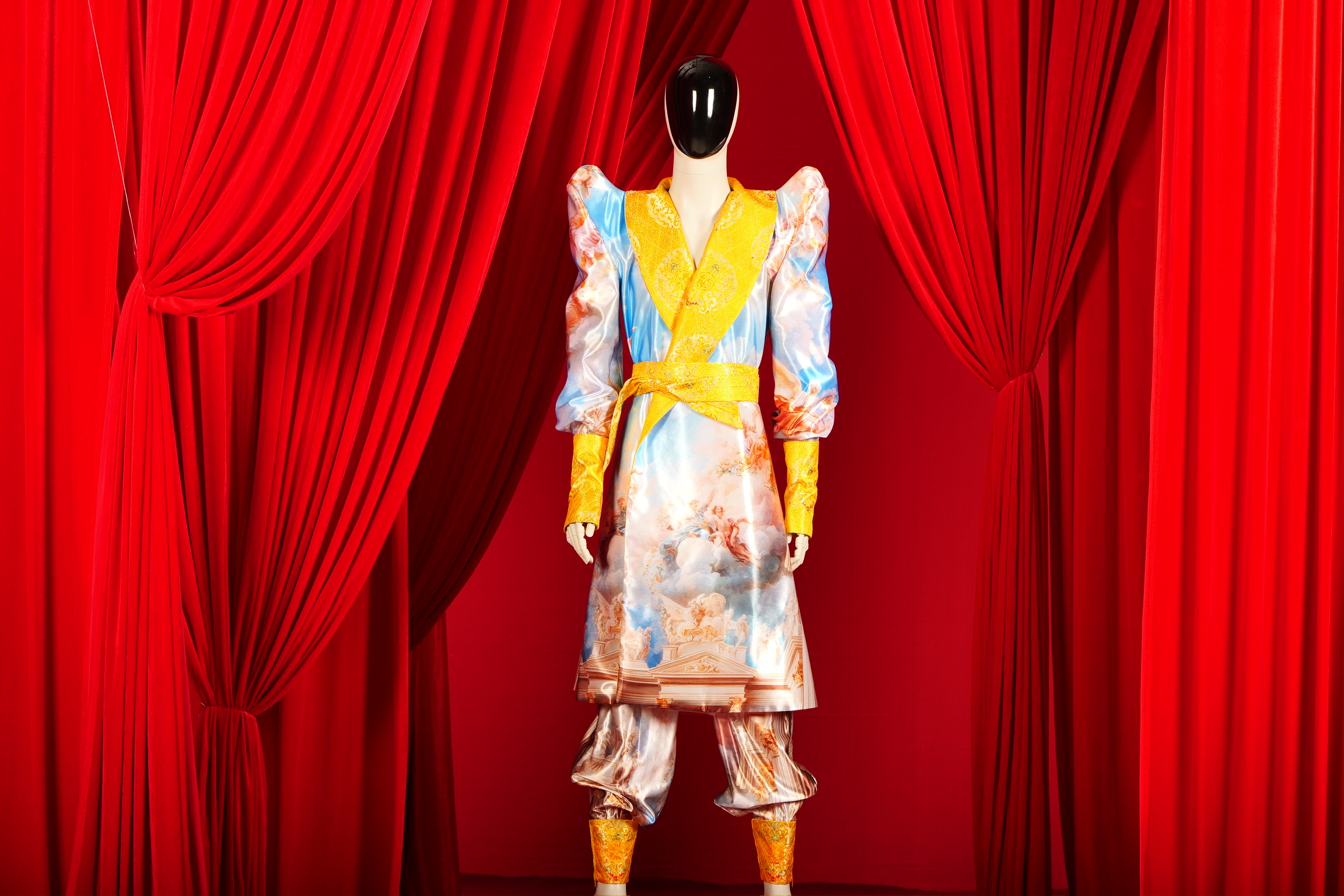
ICHOR Collection
Piece III of V
Sistine
Structural kimono. 700 hours of hand work. Hand-painted silk from Kyoto with carbon fiber shoulder armature.
Structural kimono. 700 hours of hand work. Hand-painted silk from Kyoto with carbon fiber shoulder armature.
The print was painted by hand on paper first. Flesh tones. Clouds. Gold leaf. Celestial figures reaching across a surface that would eventually wrap around a machine. The original painting took three weeks. Then it was scanned at 1200 DPI and sent to a facility outside Kyoto that usually prints kimono fabric. They had never printed for a robot before. They said yes anyway.
The shoulders extend 8 centimeters past the robot's actual joint width on each side. They are not padding. Inside each shoulder is a carbon fiber armature that holds the shape while allowing full rotation underneath. The armature weighs 180 grams per side. It is rigid enough to maintain the silhouette but thin enough that it does not interfere with the shoulder actuator's range of motion. The engineering problem was not making the shoulders wide. It was making them wide and then making them disappear. The carbon fiber armature technique was developed through our Japanese aerospace facility connections and refined across hundreds of failed prototypes before we achieved the weight-to-rigidity ratio required.
The gold obi belt is load-bearing. It anchors the front panels and distributes garment weight across the torso so the actuators do not work against the fabric. Every gram matters when a machine is wearing clothing. The obi closes with a magnetic system hidden inside the fold. From the outside it looks tied. It is not. It is engineered.
When the robot moves in Sistine the printed silk shifts across the body. The celestial figures stretch and compress. The gold leaf details catch light at angles that change with every degree of rotation. The carbon fiber shoulders hold their line while everything below them flows. It looks like a painting that learned to breathe. That was the sketch. That was always the sketch.
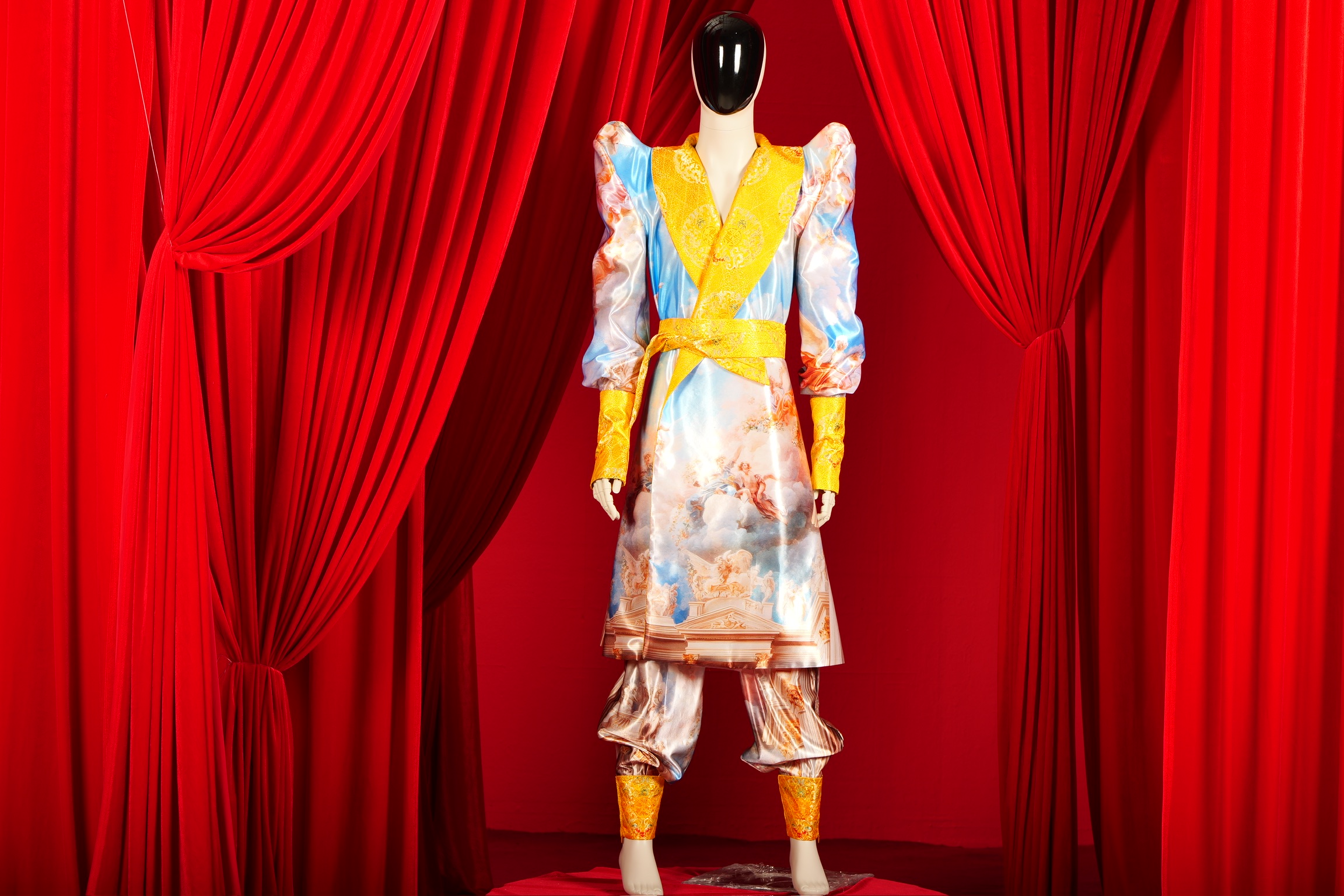
Each Sistine is made to order for your specific platform
Commission This Piece